

Senior Policy Advisor, UN-REDD & GIORNI Focal Point
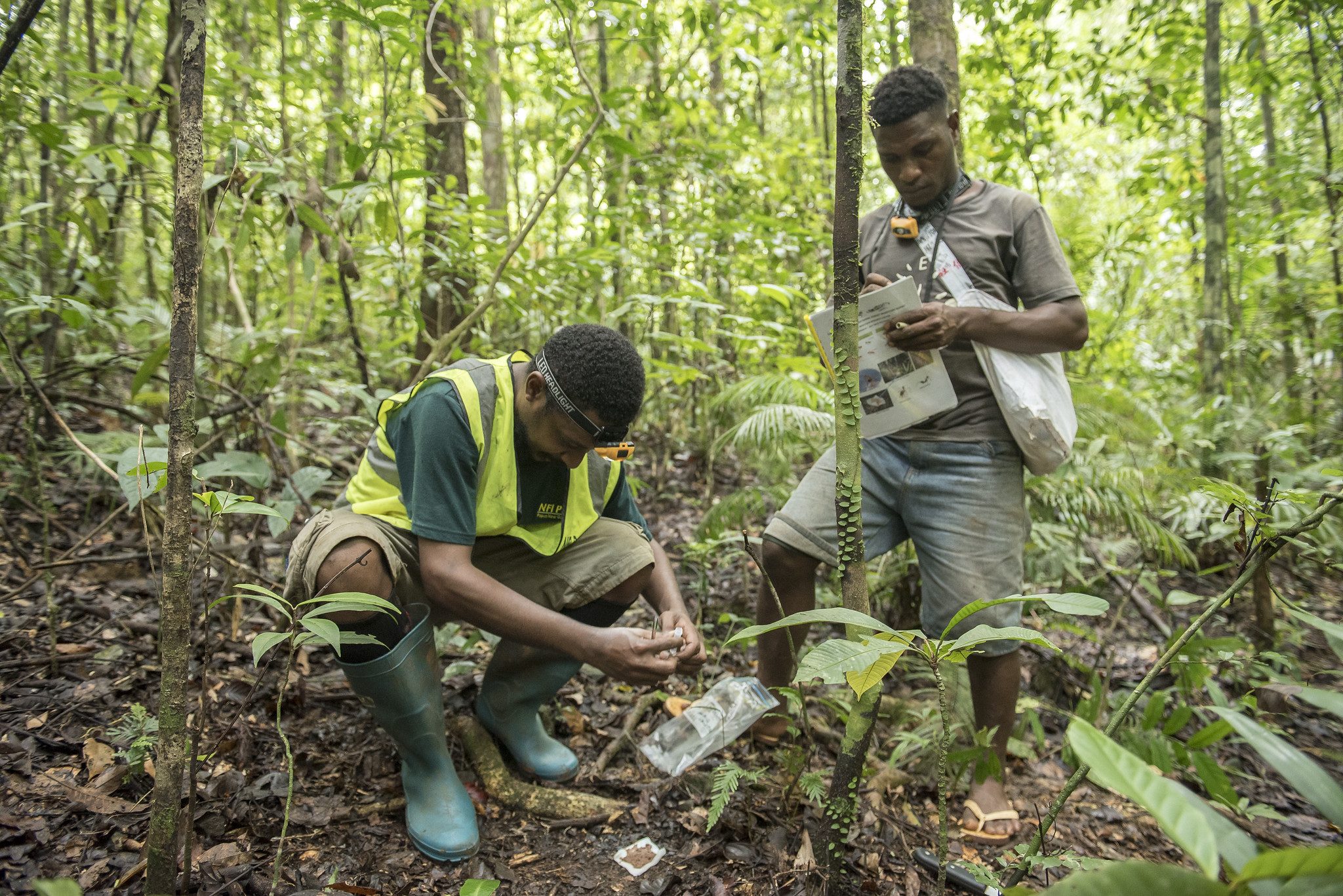
Every year, the world loses tropical forests at a rate that would not be accepted for any other system that the global economy depends on.
The consequences of this loss are measurable: billions of tons of carbon dioxide are released into the atmosphere, exacerbating climate change; natural habitats for millions of species are fragmented or destroyed; and the livelihoods of the nearly one billion people who rely on forests for food, water, and income are disrupted. Yet, despite the magnitude of this crisis, forests and deforestation continue to be ignored in current economic models.
Nor are the critical planetary services that forests provide catered for in our economies: from regulating global rainfall patterns and safeguarding water resources, to preventing flooding, limiting soil erosion, and hosting and protecting biodiversity. Moreover, healthy forests play a crucial role in mitigating climate change by acting as carbon sinks, absorbing billions of metric tonnes of carbon dioxide annually.
Forests have been providing these essential environmental services to humans, for free, since time immemorial. But after decades of incessant deforestation, these environmental services are at an impasse.
Despite the valuable environmental services they provide, the world does not finance forests as an integral part of the global economy and as a key foundation in fighting climate change. In fact, less than two percent of mitigation-related development finance reaches forests.
Over the past fifteen years, some countries have been working to close this gap. Three things are now clear:
1. Forests are economic infrastructure and we should finance them as such
The ecosystem services that forests provide to local and global economies are well documented. The Amazon forest recycles water into the atmosphere that falls as rain over vast farming lands, thus sustaining agriculture across South America. The Congo Basin does the same for central and southern Africa. The forests of Southeast Asia regulate the monsoon systems locally, thus safeguarding both lands and villages, including farming systems that feed several billion people.
Strip these environmental systems away, and the costs are paid in reduced farm yields, in extreme floods, in failed harvests, in cities that run out of potable water, in food crises and in forced displacement and migration.
Yet we do not invest in forests at a level commensurate to the full value they provide to the economy. This mismatch makes the current situation untenable. For comparison, the International Energy Agency tracks over US$2 trillion in annual investment in clean energy infrastructure whereas forests — which perform planetary functions no engineered system can replicate at comparable cost — remain significantly underfunded, with an annual shortfall of $216 billion.
The good news is that a United Nations framework designed to correct this mismatch already exists. It is called REDD+ (Reducing Emissions from Deforestation and Forest Degradation) and has a specific provision in the Paris Agreement (Article 5). The UN-REDD Programme, founded in 2008 by UNDP, UNEP and FAO, was established to support countries adopt and implement REDD+ policies. UN-REDD currently serves 66 countries in the Global South that, together, host 70 percent of the world's tropical forests. REDD+ treats verified emission reductions of forest carbon as a valuable service and creates a mechanism to pay countries accordingly, thus linking environmental and development finance.
UN-REDD has been instrumental to deploying $500 million of REDD+ finance distributed across eight countries, including Brazil and Indonesia, through the Green Climate Fund’s REDD+ results-based payments' pilot. In addition, with UN-REDD support, four countries have signed payment agreements, worth up to $195 million, with the LEAF Coalition, having demonstrated high integrity emissions reductions under the TREES standard. Now, 13 more countries are working towards this goal.
Most recently, the Tropical Forests Forever Facility (TFFF) was launched as an innovative, once-in-a-generation instrument to finance forests at scale under a blended public-private scheme. The TFFF aims at channeling $4 billion annually for countries in the Global South that protect tropical forests.
2. Forest finance must benefit Indigenous Peoples and local communities – they are the primary forest guardians
Forests under the stewardship of Indigenous Peoples are lost at lower rates than forests under almost any other tenure arrangement, including state-protected areas. Indigenous Peoples and local communities steward about 36 percent of the world's intact forests, and they do so despite low political recognition and little financial support.
By every parameter usually applied to measure the effectiveness of climate finance — cost per tonne of carbon avoided, income impact, scale of land covered — finance that reaches Indigenous Peoples and that secures their land rights yields significant returns.
This principle has shaped how REDD+ finance was conceived and evolves. UN-REDD's governing body includes representatives of Indigenous Peoples and civil society organizations. In addition, the UN-REDD pioneered Community-Based REDD+ to demonstrate the value and effectiveness of channeling climate finance directly to communities for their forest action, while its pioneer gender marker is now used by other international initiatives to track whether climate finance reaches women in an equitable way. Building on these, the Climate Promise recently set a direct grants initiative, leveraging UNDP's Small Grants Programme to channel $1.8 million to 42 Indigenous communities across Ecuador, Colombia, Kenya and Cambodia, empowering and enabling them to implement climate and nature solutions that benefit the planet.
3. Forest financing must be urgently scaled up – from both public and private sources
REDD+ is a proven model to direct international climate finance to forest conservation and sustainable development, having built a methodological architecture for results-based climate finance in forest nations and territories.
In Costa Rica, REDD+ payments have consolidated its homegrown payments for environmental services programme by enabling direct benefits to both rural women and Indigenous communities. In Ecuador, REDD+ policies led to the establishment of a national framework that now supports the world's first policy-based, certified deforestation-free coffee supply chain. In Brazil, the Floresta+ programme — financed with REDD+ proceeds — channels federal payments to smallholder farmers, Indigenous Peoples, and traditional communities for the conservation of native forests. In Indonesia, REDD+ payments are being reinvested in sustainable forest management and rehabilitation, as well as community empowerment and poverty alleviation. These innovations were all made possible through REDD+ finance.
The third generation of national climate plans, or NDCs, present the perfect opportunity to attract further investments, from both public and private sources, for scaling up forest action and advancing forest conservation, climate action and community development in synergy. Ninety-six percent of NDCs include references to forests and land use. Moreover, the leading role of Indigenous Peoples and local communities in forest conservation and restoration is also well-recognized across NDCs, with 72 percent of measures related to forests and land use involving them as key actors.
Carbon markets are becoming another important source of finance for forests. By putting a price on carbon and rewarding efforts to reduce or remove emissions, these markets can help raise the funding needed to build low-carbon, climate-resilient economies. With clear rules now agreed under the Paris Agreement, and a growing shift towards high environmental integrity and social equity, carbon markets a new, complementary frontline of forest financing.
Protecting forests and the multitude of services they provide requires a shift in how they are financed. There are already a range of financing mechanisms that are working, from REDD+ results-based payments to direct grants to Indigenous Peoples to NDC financing strategies. What we need to do now is to massively scale up investments, from both public and private sources, and start treating forests as the vital global infrastructure they are.